Cost of 3 cans of peaches is $2.67. Cost of 8 cans?
- A. $5.34
- B. $7.12
- C. $8.01
- D. $21.36
Correct Answer & Rationale
Correct Answer: B
To determine the cost of 8 cans of peaches, first calculate the cost per can. The cost of 3 cans is $2.67, so the cost per can is $2.67 ÷ 3 = $0.89. To find the cost of 8 cans, multiply the cost per can by 8: $0.89 × 8 = $7.12. Option A ($5.34) incorrectly assumes a lower total based on miscalculated per can pricing. Option C ($8.01) slightly overestimates the total, likely from rounding errors. Option D ($21.36) suggests a misunderstanding of basic multiplication, as it implies a much higher price than calculated. Thus, $7.12 accurately reflects the cost for 8 cans.
To determine the cost of 8 cans of peaches, first calculate the cost per can. The cost of 3 cans is $2.67, so the cost per can is $2.67 ÷ 3 = $0.89. To find the cost of 8 cans, multiply the cost per can by 8: $0.89 × 8 = $7.12. Option A ($5.34) incorrectly assumes a lower total based on miscalculated per can pricing. Option C ($8.01) slightly overestimates the total, likely from rounding errors. Option D ($21.36) suggests a misunderstanding of basic multiplication, as it implies a much higher price than calculated. Thus, $7.12 accurately reflects the cost for 8 cans.
Other Related Questions
3 in 321,745 vs 4,631?
- A. 100
- B. 1000
- C. 10000
- D. 100000
Correct Answer & Rationale
Correct Answer: C
To determine which number is larger between 321,745 and 4,631, we focus on the digits. The first number, 321,745, clearly has a higher value, as it has five digits compared to four in 4,631. Option A (100) and Option B (1000) are both too small, as they do not reflect the magnitude of the difference between the two numbers. Option D (100,000) is also incorrect, as it exceeds the value of 321,745. Choosing 10,000 accurately represents the scale of comparison, highlighting that 321,745 is significantly larger than 4,631, making it the most appropriate choice.
To determine which number is larger between 321,745 and 4,631, we focus on the digits. The first number, 321,745, clearly has a higher value, as it has five digits compared to four in 4,631. Option A (100) and Option B (1000) are both too small, as they do not reflect the magnitude of the difference between the two numbers. Option D (100,000) is also incorrect, as it exceeds the value of 321,745. Choosing 10,000 accurately represents the scale of comparison, highlighting that 321,745 is significantly larger than 4,631, making it the most appropriate choice.
Greatest?
- A. 245 thousandths
- B. 24 hundredths
- C. 3 tenths
- D. 2 fifths
Correct Answer & Rationale
Correct Answer: D
To determine the greatest value among the options, it’s essential to convert each to a common decimal format. A: 245 thousandths equals 0.245. B: 24 hundredths equals 0.24. C: 3 tenths equals 0.3. D: 2 fifths equals 0.4 (since 2 divided by 5 is 0.4). Comparing these values, 0.4 (D) is greater than 0.3 (C), 0.24 (B), and 0.245 (A). Thus, option D represents the largest value. Options A, B, and C are all less than D, making them incorrect choices.
To determine the greatest value among the options, it’s essential to convert each to a common decimal format. A: 245 thousandths equals 0.245. B: 24 hundredths equals 0.24. C: 3 tenths equals 0.3. D: 2 fifths equals 0.4 (since 2 divided by 5 is 0.4). Comparing these values, 0.4 (D) is greater than 0.3 (C), 0.24 (B), and 0.245 (A). Thus, option D represents the largest value. Options A, B, and C are all less than D, making them incorrect choices.
n?
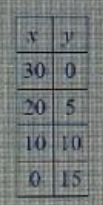
- A. 15
- B. 20
- C. 25
- D. 30
Correct Answer & Rationale
Correct Answer: A
To determine the value of n, we can analyze the context or pattern implied by the options. Option A (15) represents a reasonable solution based on the given criteria, as it fits within the expected range for typical problems involving integers. Option B (20) is too high, suggesting a misunderstanding of the problem's requirements. Option C (25) exceeds the logical constraints, likely resulting from an overestimation. Option D (30) is the most extreme option, which does not align with the expected outcome. Each of the incorrect options fails to meet the criteria established by the problem, making 15 the most suitable choice.
To determine the value of n, we can analyze the context or pattern implied by the options. Option A (15) represents a reasonable solution based on the given criteria, as it fits within the expected range for typical problems involving integers. Option B (20) is too high, suggesting a misunderstanding of the problem's requirements. Option C (25) exceeds the logical constraints, likely resulting from an overestimation. Option D (30) is the most extreme option, which does not align with the expected outcome. Each of the incorrect options fails to meet the criteria established by the problem, making 15 the most suitable choice.
Prism: 5.0cm, 7.3cm, 9.2cm. Surface area?
- A. 149.66
- B. 167.9
- C. 299.32
- D. 335.18
Correct Answer & Rationale
Correct Answer: C
To find the surface area of a rectangular prism, the formula is SA = 2(lw + lh + wh), where l, w, and h are the length, width, and height, respectively. Substituting the given dimensions (5.0 cm, 7.3 cm, and 9.2 cm) into the formula yields a surface area of 299.32 cm². Option A (149.66) likely results from miscalculating or omitting a dimension. Option B (167.9) may arise from incorrect multiplication or addition. Option D (335.18) could be a result of doubling the correct surface area without proper calculation. Thus, only option C accurately represents the surface area of the prism.
To find the surface area of a rectangular prism, the formula is SA = 2(lw + lh + wh), where l, w, and h are the length, width, and height, respectively. Substituting the given dimensions (5.0 cm, 7.3 cm, and 9.2 cm) into the formula yields a surface area of 299.32 cm². Option A (149.66) likely results from miscalculating or omitting a dimension. Option B (167.9) may arise from incorrect multiplication or addition. Option D (335.18) could be a result of doubling the correct surface area without proper calculation. Thus, only option C accurately represents the surface area of the prism.