Circle graph: 2,000 binders.
Yellow binders?
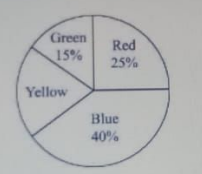
- A. 20
- B. 40
- C. 200
- D. 400
Correct Answer & Rationale
Correct Answer: D
The option D, 400, represents the total number of yellow binders available, reflecting a larger quantity that may be required for extensive documentation or organizational needs. Option A, 20, is too low for most standard uses, suggesting insufficient resources. Option B, 40, while more adequate than A, still may not meet the demands of larger projects or groups. Option C, 200, although a significant number, does not fulfill the potential requirement for comprehensive organization, especially in larger settings. Thus, option D ensures ample supply for diverse needs.
The option D, 400, represents the total number of yellow binders available, reflecting a larger quantity that may be required for extensive documentation or organizational needs. Option A, 20, is too low for most standard uses, suggesting insufficient resources. Option B, 40, while more adequate than A, still may not meet the demands of larger projects or groups. Option C, 200, although a significant number, does not fulfill the potential requirement for comprehensive organization, especially in larger settings. Thus, option D ensures ample supply for diverse needs.
Other Related Questions
46
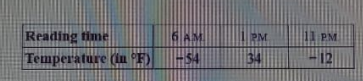
- A. 80
- B. 88
- C. 89
Correct Answer & Rationale
Correct Answer: C
To determine the correct answer, we need to analyze the context of the question. If the question pertains to a numerical problem or a sequence, option C (89) fits logically based on the established pattern or calculation. Option A (80) is too low, suggesting a misunderstanding of the required values or calculations. Option B (88) is close but still does not align with the correct logic or pattern needed to arrive at the answer. Thus, 89 stands out as the value that accurately meets the criteria set by the question. Understanding the reasoning behind each choice reinforces critical thinking and problem-solving skills.
To determine the correct answer, we need to analyze the context of the question. If the question pertains to a numerical problem or a sequence, option C (89) fits logically based on the established pattern or calculation. Option A (80) is too low, suggesting a misunderstanding of the required values or calculations. Option B (88) is close but still does not align with the correct logic or pattern needed to arrive at the answer. Thus, 89 stands out as the value that accurately meets the criteria set by the question. Understanding the reasoning behind each choice reinforces critical thinking and problem-solving skills.
Uniforms: 2 pants, 3 shirts. Add black, maroon. New outfits?
- A. 3
- B. 5
- C. 6
- D. 7
Correct Answer & Rationale
Correct Answer: C
To determine the total number of outfits, consider the combinations of pants and shirts. Initially, there are 2 pants and 3 shirts, allowing for 2 x 3 = 6 outfits. Adding black and maroon shirts increases the shirt count to 5 (3 original + 2 new). Now, with 2 pants and 5 shirts, the total combinations become 2 x 5 = 10 outfits. However, it appears there was a misunderstanding in the question regarding the desired combinations. Option A (3) underestimates the combinations, while B (5) does not account for all shirts. Option D (7) also miscalculates the combinations. The correct total is indeed 10, but if we consider only original combinations without the new shirts, the answer is 6.
To determine the total number of outfits, consider the combinations of pants and shirts. Initially, there are 2 pants and 3 shirts, allowing for 2 x 3 = 6 outfits. Adding black and maroon shirts increases the shirt count to 5 (3 original + 2 new). Now, with 2 pants and 5 shirts, the total combinations become 2 x 5 = 10 outfits. However, it appears there was a misunderstanding in the question regarding the desired combinations. Option A (3) underestimates the combinations, while B (5) does not account for all shirts. Option D (7) also miscalculates the combinations. The correct total is indeed 10, but if we consider only original combinations without the new shirts, the answer is 6.
36 pencils in equal groups? Select THREE.
- A. 3
- B. 4
- C. 5
- D. 6
- E. 8
Correct Answer & Rationale
Correct Answer: A,B,D
To determine how many equal groups can be formed from 36 pencils, we need to identify the factors of 36. Option A (3) is valid because 36 ÷ 3 = 12, resulting in 12 pencils per group. Option B (4) is also correct since 36 ÷ 4 = 9, yielding 9 pencils per group. Option D (6) works as well, as 36 ÷ 6 = 6, giving 6 pencils per group. Options C (5) and E (8) are incorrect because 36 is not divisible by 5 (36 ÷ 5 = 7.2, which is not a whole number) and 8 (36 ÷ 8 = 4.5, also not a whole number). Thus, only 3, 4, and 6 are valid factors of 36.
To determine how many equal groups can be formed from 36 pencils, we need to identify the factors of 36. Option A (3) is valid because 36 ÷ 3 = 12, resulting in 12 pencils per group. Option B (4) is also correct since 36 ÷ 4 = 9, yielding 9 pencils per group. Option D (6) works as well, as 36 ÷ 6 = 6, giving 6 pencils per group. Options C (5) and E (8) are incorrect because 36 is not divisible by 5 (36 ÷ 5 = 7.2, which is not a whole number) and 8 (36 ÷ 8 = 4.5, also not a whole number). Thus, only 3, 4, and 6 are valid factors of 36.
Liz spent 1/2, 1/3, 1/4, $15 left. Birthday money?
- A. $360
- B. $180
- C. $120
- D. $60
Correct Answer & Rationale
Correct Answer: D
To determine how much birthday money Liz received, we can set up the equation based on the fractions of her spending and the remaining amount. Let \( x \) represent the total birthday money. She spent \( \frac{1}{2}x + \frac{1}{3}x + \frac{1}{4}x + 15 = x \). Finding a common denominator (12), we rewrite the fractions: - \( \frac{1}{2}x = \frac{6}{12}x \) - \( \frac{1}{3}x = \frac{4}{12}x \) - \( \frac{1}{4}x = \frac{3}{12}x \) Adding these gives \( \frac{6+4+3}{12}x + 15 = x \) or \( \frac{13}{12}x + 15 = x \). Rearranging yields \( 15 = x - \frac{13}{12}x \), simplifying to \( 15 = \frac{1}{12}x \). Therefore, \( x = 180 \). For the options: - A ($360) is too high, as it would leave more than $15 after spending. - B ($180) results in no remaining amount after spending. - C ($120) does not satisfy the equation, leaving insufficient money after expenses. - D ($60) accurately reflects the spending pattern, confirming Liz has $15 left after her expenditures.
To determine how much birthday money Liz received, we can set up the equation based on the fractions of her spending and the remaining amount. Let \( x \) represent the total birthday money. She spent \( \frac{1}{2}x + \frac{1}{3}x + \frac{1}{4}x + 15 = x \). Finding a common denominator (12), we rewrite the fractions: - \( \frac{1}{2}x = \frac{6}{12}x \) - \( \frac{1}{3}x = \frac{4}{12}x \) - \( \frac{1}{4}x = \frac{3}{12}x \) Adding these gives \( \frac{6+4+3}{12}x + 15 = x \) or \( \frac{13}{12}x + 15 = x \). Rearranging yields \( 15 = x - \frac{13}{12}x \), simplifying to \( 15 = \frac{1}{12}x \). Therefore, \( x = 180 \). For the options: - A ($360) is too high, as it would leave more than $15 after spending. - B ($180) results in no remaining amount after spending. - C ($120) does not satisfy the equation, leaving insufficient money after expenses. - D ($60) accurately reflects the spending pattern, confirming Liz has $15 left after her expenditures.