Prism: 5.0cm, 7.3cm, 9.2cm. Surface area?
- A. 149.66
- B. 167.9
- C. 299.32
- D. 335.18
Correct Answer & Rationale
Correct Answer: C
To find the surface area of a rectangular prism, the formula is SA = 2(lw + lh + wh), where l, w, and h are the length, width, and height, respectively. Substituting the given dimensions (5.0 cm, 7.3 cm, and 9.2 cm) into the formula yields a surface area of 299.32 cm². Option A (149.66) likely results from miscalculating or omitting a dimension. Option B (167.9) may arise from incorrect multiplication or addition. Option D (335.18) could be a result of doubling the correct surface area without proper calculation. Thus, only option C accurately represents the surface area of the prism.
To find the surface area of a rectangular prism, the formula is SA = 2(lw + lh + wh), where l, w, and h are the length, width, and height, respectively. Substituting the given dimensions (5.0 cm, 7.3 cm, and 9.2 cm) into the formula yields a surface area of 299.32 cm². Option A (149.66) likely results from miscalculating or omitting a dimension. Option B (167.9) may arise from incorrect multiplication or addition. Option D (335.18) could be a result of doubling the correct surface area without proper calculation. Thus, only option C accurately represents the surface area of the prism.
Other Related Questions
50 acres, 23 apple. Percent left?
- A. 27%
- B. 46%
- C. 54%
- D. 77%
Correct Answer & Rationale
Correct Answer: C
To determine the percentage of land left after allocating 23 acres for apple trees from a total of 50 acres, first calculate the remaining land: 50 - 23 = 27 acres. Then, to find the percentage of land left, divide the remaining acres by the total acres and multiply by 100: (27/50) * 100 = 54%. Option A (27%) miscalculates the percentage of land used instead of what remains. Option B (46%) incorrectly assumes a different allocation of land. Option D (77%) mistakenly represents a higher percentage than what is left. Thus, option C accurately reflects the remaining percentage of land.
To determine the percentage of land left after allocating 23 acres for apple trees from a total of 50 acres, first calculate the remaining land: 50 - 23 = 27 acres. Then, to find the percentage of land left, divide the remaining acres by the total acres and multiply by 100: (27/50) * 100 = 54%. Option A (27%) miscalculates the percentage of land used instead of what remains. Option B (46%) incorrectly assumes a different allocation of land. Option D (77%) mistakenly represents a higher percentage than what is left. Thus, option C accurately reflects the remaining percentage of land.
46
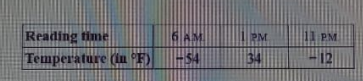
- A. 80
- B. 88
- C. 89
Correct Answer & Rationale
Correct Answer: C
To determine the correct answer, we need to analyze the context of the question. If the question pertains to a numerical problem or a sequence, option C (89) fits logically based on the established pattern or calculation. Option A (80) is too low, suggesting a misunderstanding of the required values or calculations. Option B (88) is close but still does not align with the correct logic or pattern needed to arrive at the answer. Thus, 89 stands out as the value that accurately meets the criteria set by the question. Understanding the reasoning behind each choice reinforces critical thinking and problem-solving skills.
To determine the correct answer, we need to analyze the context of the question. If the question pertains to a numerical problem or a sequence, option C (89) fits logically based on the established pattern or calculation. Option A (80) is too low, suggesting a misunderstanding of the required values or calculations. Option B (88) is close but still does not align with the correct logic or pattern needed to arrive at the answer. Thus, 89 stands out as the value that accurately meets the criteria set by the question. Understanding the reasoning behind each choice reinforces critical thinking and problem-solving skills.
Digit 1 in ten thousands 9 in ones? Select ALL.

- A. 12,679
- B. 12,769
- C. 12,796
- D. 21,679
- E. 21,769
Correct Answer & Rationale
Correct Answer: A,B: 1 ten thousands, 9 ones. C: 6 ones. D,E,F: 2 ten thousands. Place values must match both conditions.
To identify numbers with 1 in the ten thousands place and 9 in the ones place, we analyze each option. - **A (12,679)**: The digit 1 is in the ten thousands place, and 9 is in the ones place, meeting both criteria. - **B (12,769)**: Here, 1 is again in the ten thousands place, and 9 is in the ones place, satisfying the conditions. - **C (12,796)**: The digit in the ones place is 6, not 9, which disqualifies it. - **D (21,679)**: The digit in the ten thousands place is 2, failing to meet the first condition. - **E (21,769)**: Similarly, 2 is in the ten thousands place, not 1. - **F (21,796)**: Again, 2 is in the ten thousands place, disqualifying this option. Only options A and B fulfill both requirements, confirming their validity.
To identify numbers with 1 in the ten thousands place and 9 in the ones place, we analyze each option. - **A (12,679)**: The digit 1 is in the ten thousands place, and 9 is in the ones place, meeting both criteria. - **B (12,769)**: Here, 1 is again in the ten thousands place, and 9 is in the ones place, satisfying the conditions. - **C (12,796)**: The digit in the ones place is 6, not 9, which disqualifies it. - **D (21,679)**: The digit in the ten thousands place is 2, failing to meet the first condition. - **E (21,769)**: Similarly, 2 is in the ten thousands place, not 1. - **F (21,796)**: Again, 2 is in the ten thousands place, disqualifying this option. Only options A and B fulfill both requirements, confirming their validity.
Leslie descended 714 ft in 34 s, took 1 min 25 s to ground. Total distance?
- A. 1,270 feet
- B. 1,515 feet
- C. 1,785 feet
- D. 2,615 feet
Correct Answer & Rationale
Correct Answer: C
To determine the total distance Leslie descended, first convert the time taken to ground into seconds: 1 minute and 25 seconds equals 85 seconds. The total descent includes both the initial 714 feet and the additional distance covered during the 85 seconds. Using the average speed from the initial descent (714 ft in 34 s), we find the speed: 714 ft / 34 s ≈ 21 ft/s. Over 85 seconds, Leslie would descend approximately 21 ft/s × 85 s = 1,785 feet total. Option A (1,270 ft) underestimates the descent. Option B (1,515 ft) is also too low. Option D (2,615 ft) overestimates the total distance. Thus, C (1,785 ft) accurately reflects the total descent.
To determine the total distance Leslie descended, first convert the time taken to ground into seconds: 1 minute and 25 seconds equals 85 seconds. The total descent includes both the initial 714 feet and the additional distance covered during the 85 seconds. Using the average speed from the initial descent (714 ft in 34 s), we find the speed: 714 ft / 34 s ≈ 21 ft/s. Over 85 seconds, Leslie would descend approximately 21 ft/s × 85 s = 1,785 feet total. Option A (1,270 ft) underestimates the descent. Option B (1,515 ft) is also too low. Option D (2,615 ft) overestimates the total distance. Thus, C (1,785 ft) accurately reflects the total descent.