The blog entry and speech excerpt below discuss the U.S. Supreme Court case of Tinker v. Des Moines (1969).
Blog
In the Tinker v. Des Moines case, the Court ruled that students lawfully exercised their rights when they wore black armbands in school as a protest against the Vietnam War. The ruling stated that school officials were wrong to suspend students from school for their act of protest. Students are not required to give up their rights when they enter a public school, especially freedom of speech, which is the foundation of democracy. These students modeled good citizenship by their actions. In contrast, school representatives placing restrictions on liberty provided a bad example to the future leaders of our country.
Speech
I believe the U.S. Supreme Court ruled correctly in Tinker v. Des Moines. Democracy requires individual expression, debate, and public protest. Still, freedom of speech is not the only issue to be considered when protests occur in public schools. School officials have a responsibility to provide a safe environment that is not disruptive to learning. Individual expression should not interfere with a school's mission to teach.
Which basic assumption is only behind the speech?
- A. Freedom of speech must be protected in schools.
- B. Citizens can express their views through symbols.
- C. Citizens should be able to express their views on issues.
- D. Freedom of speech has some restrictions
Correct Answer & Rationale
Correct Answer: D
The assumption that freedom of speech has some restrictions is solely focused on the speech itself, acknowledging that while individuals have the right to express themselves, this right is not absolute. Option A discusses the protection of speech specifically in schools, which implies a context rather than the nature of speech itself. Option B refers to expression through symbols, indicating non-verbal communication, thus not limited to speech. Option C emphasizes the ability to express views on issues broadly, again not confined to speech alone. Each of these options extends beyond the core principle of speech restrictions.
The assumption that freedom of speech has some restrictions is solely focused on the speech itself, acknowledging that while individuals have the right to express themselves, this right is not absolute. Option A discusses the protection of speech specifically in schools, which implies a context rather than the nature of speech itself. Option B refers to expression through symbols, indicating non-verbal communication, thus not limited to speech. Option C emphasizes the ability to express views on issues broadly, again not confined to speech alone. Each of these options extends beyond the core principle of speech restrictions.
Other Related Questions
Based on the excerpt, which conclusion can be drawn about the U.S. Constitution and the Bill of Rights?
- A. Ratification of the Bill of Rights was completed before the Constitution was drafted.
- B. Ratification of the Constitution was dependent on the passage of the Bill of Rights.
- C. Most leaders were worried that the Bill of Rights would weaken the ruling class protected by the Constitution.
- D. Many leaders were concerned that the Bill of Rights would upset the balance of powers outlined in the Constitution.
Correct Answer & Rationale
Correct Answer: B
The conclusion that ratification of the Constitution was dependent on the passage of the Bill of Rights is supported by historical context, as many states required assurance of individual rights to approve the Constitution. Option A is incorrect because the Bill of Rights was introduced after the Constitution was drafted. Option C misrepresents the intent of the Bill of Rights; leaders were primarily concerned with protecting individual liberties rather than preserving the ruling class. Option D is also inaccurate, as the Bill of Rights aimed to safeguard citizens' rights without disrupting the balance of powers established by the Constitution.
The conclusion that ratification of the Constitution was dependent on the passage of the Bill of Rights is supported by historical context, as many states required assurance of individual rights to approve the Constitution. Option A is incorrect because the Bill of Rights was introduced after the Constitution was drafted. Option C misrepresents the intent of the Bill of Rights; leaders were primarily concerned with protecting individual liberties rather than preserving the ruling class. Option D is also inaccurate, as the Bill of Rights aimed to safeguard citizens' rights without disrupting the balance of powers established by the Constitution.
Which statement from President Polk's address is a fact rather than an opinion?
- A. "Our title to… Oregon is 'clear and unquestionable,' and already are our people preparing to perfect that title by occupying it with their wives and children..."
- B. "[O]ur people… have filled the eastern valley of the Mississippi,... ascended the Missouri to its headsprings..."
- C. "Nor will it become in a less degree my duty to… maintain by all constitutional means the right of the United States to that portion of our territory which lies beyond the Rocky Mountains."
- D. "The jurisdiction of our laws and the benefits of our republican institutions should be extended over them in the distant regions which they have selected for their homes."
Correct Answer & Rationale
Correct Answer: B
Option B presents a factual statement about the movement of people in the United States, specifically noting their migration patterns along the Mississippi and Missouri rivers. This statement can be verified through historical records, making it a fact. In contrast, Option A expresses a subjective belief regarding the clarity of the title to Oregon, which is an opinion rather than an objective truth. Option C discusses the duty of the President in a way that implies a commitment but does not provide verifiable information. Lastly, Option D suggests a normative view on governance and territorial expansion, reflecting a belief in the benefits of U.S. institutions rather than stating a fact.
Option B presents a factual statement about the movement of people in the United States, specifically noting their migration patterns along the Mississippi and Missouri rivers. This statement can be verified through historical records, making it a fact. In contrast, Option A expresses a subjective belief regarding the clarity of the title to Oregon, which is an opinion rather than an objective truth. Option C discusses the duty of the President in a way that implies a commitment but does not provide verifiable information. Lastly, Option D suggests a normative view on governance and territorial expansion, reflecting a belief in the benefits of U.S. institutions rather than stating a fact.
How does the message presented by Senator Paul differ from the message presented by President Obama?
- A. Only Senator Paul promotes less government involvement in health care.
- B. Only Senator Paul wants to secure more health care for U.S. citizens.
- C. Only President Obama supports the Supreme Court's right to rule about health care.
- D. Only President Obama discusses problems in the health care industry.
Correct Answer & Rationale
Correct Answer: A
Senator Paul advocates for reduced government involvement in health care, emphasizing personal choice and market-driven solutions. This contrasts with President Obama's approach, which supports a more active role for the government in expanding access and regulating the industry. Option B is incorrect as both politicians aim to improve health care access, albeit through different methods. Option C misrepresents Obama's stance; he supports health care reforms that align with Supreme Court rulings but does not solely focus on this aspect. Option D is misleading; while Obama addresses health care issues, Senator Paul also discusses industry challenges, making this option inaccurate.
Senator Paul advocates for reduced government involvement in health care, emphasizing personal choice and market-driven solutions. This contrasts with President Obama's approach, which supports a more active role for the government in expanding access and regulating the industry. Option B is incorrect as both politicians aim to improve health care access, albeit through different methods. Option C misrepresents Obama's stance; he supports health care reforms that align with Supreme Court rulings but does not solely focus on this aspect. Option D is misleading; while Obama addresses health care issues, Senator Paul also discusses industry challenges, making this option inaccurate.
The newspaper writer's opinion that
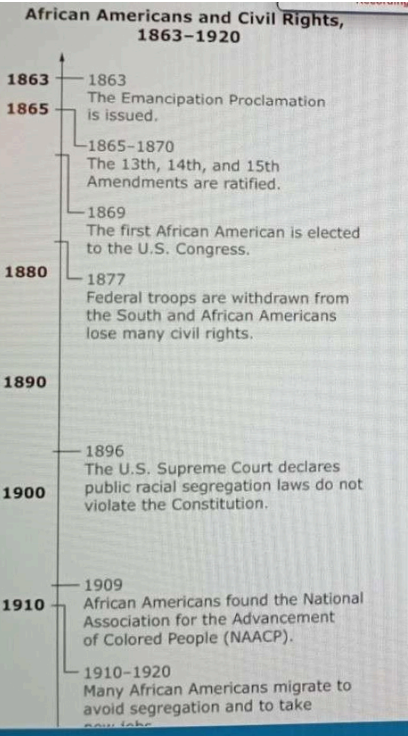
- A. slavery should have been preserved
- B. Jim Crow laws should have been stopped
- C. Jim Crow laws benefited the south
- D. Jim Crow laws had benefited the South constitutional changes were successful
Correct Answer & Rationale
Correct Answer: C
The opinion that Jim Crow laws benefited the South reflects a perspective that views these discriminatory laws as advantageous for maintaining social order and economic benefits for white populations, despite their oppressive nature. Option A suggests a support for slavery, which is widely condemned and not a mainstream opinion. Option B advocates for the cessation of Jim Crow laws, opposing the notion that they were beneficial. Option D incorrectly implies that constitutional changes related to Jim Crow were successful, overlooking the ongoing struggles for civil rights and equality. Thus, option C captures a historically inaccurate yet prevalent viewpoint of the time.
The opinion that Jim Crow laws benefited the South reflects a perspective that views these discriminatory laws as advantageous for maintaining social order and economic benefits for white populations, despite their oppressive nature. Option A suggests a support for slavery, which is widely condemned and not a mainstream opinion. Option B advocates for the cessation of Jim Crow laws, opposing the notion that they were beneficial. Option D incorrectly implies that constitutional changes related to Jim Crow were successful, overlooking the ongoing struggles for civil rights and equality. Thus, option C captures a historically inaccurate yet prevalent viewpoint of the time.