Isabella: 1,590x8 Jayden: 1,590x10 Michael: 1,600x8 Sarah: 1,600x10
Which student wrote the estimate closest to 1,592 + 8?
- A. Isabella
- B. Jayden
- C. Michael
- D. Sarah
Correct Answer & Rationale
Correct Answer: A
Isabella's estimate of 1,592 + 8 is 1,600, which is closest to the actual sum. This estimation rounds 1,592 to 1,590 and adds 10 for simplicity, yielding 1,600. Jayden likely underestimated or rounded incorrectly, resulting in a less accurate estimate. Michael may have rounded too far or added an incorrect value, leading to a larger discrepancy. Sarah's estimate might not have accounted properly for the addition, causing it to stray further from the actual result. Thus, Isabella’s approach demonstrates the most accurate estimation strategy.
Isabella's estimate of 1,592 + 8 is 1,600, which is closest to the actual sum. This estimation rounds 1,592 to 1,590 and adds 10 for simplicity, yielding 1,600. Jayden likely underestimated or rounded incorrectly, resulting in a less accurate estimate. Michael may have rounded too far or added an incorrect value, leading to a larger discrepancy. Sarah's estimate might not have accounted properly for the addition, causing it to stray further from the actual result. Thus, Isabella’s approach demonstrates the most accurate estimation strategy.
Other Related Questions
Prime numbers? Select ALL.
- A. 21
- B. 23
- C. 25
- D. 27
- E. 29
Correct Answer & Rationale
Correct Answer: B,E
Prime numbers are defined as natural numbers greater than 1 that have no positive divisors other than 1 and themselves. - **Option A: 21** is not prime because it can be divided by 1, 3, 7, and 21. - **Option B: 23** is prime; it has no divisors other than 1 and 23. - **Option C: 25** is not prime as it can be divided by 1, 5, and 25. - **Option D: 27** is not prime since it can be divided by 1, 3, 9, and 27. - **Option E: 29** is prime; it has no divisors other than 1 and 29. Thus, 23 and 29 are the only prime numbers in the list.
Prime numbers are defined as natural numbers greater than 1 that have no positive divisors other than 1 and themselves. - **Option A: 21** is not prime because it can be divided by 1, 3, 7, and 21. - **Option B: 23** is prime; it has no divisors other than 1 and 23. - **Option C: 25** is not prime as it can be divided by 1, 5, and 25. - **Option D: 27** is not prime since it can be divided by 1, 3, 9, and 27. - **Option E: 29** is prime; it has no divisors other than 1 and 29. Thus, 23 and 29 are the only prime numbers in the list.
Equivalent to 2(4f+2g)? Select ALL.
- A. 4*(2f+g)
- B. 4(2f+2g)
- C. 2f(4+2g)
- D. 16f+4g
- E. 8f+2g
Correct Answer & Rationale
Correct Answer: A,F
To determine which expressions are equivalent to \( 2(4f + 2g) \), we first simplify it: \[ 2(4f + 2g) = 8f + 4g \] Now, let's analyze each option: **A: \( 4(2f + g) \)** This expands to \( 8f + 4g \), matching our simplified expression. **B: \( 4(2f + 2g) \)** This simplifies to \( 8f + 8g \), which does not match \( 8f + 4g \). **C: \( 2f(4 + 2g) \)** This expands to \( 8f + 4fg \), introducing an extra term \( 4fg \) that makes it unequal. **D: \( 16f + 4g \)** This expression has \( 16f \), which is double the \( 8f \) we expect, thus it is not equivalent. **E: \( 8f + 2g \)** Here, while \( 8f \) matches, \( 2g \) does not equal \( 4g \), making it non-equivalent. **F: \( 8f + 4g \)** This matches our simplified expression exactly, confirming its equivalence. In summary, options A and F correctly represent the original expression, while B, C, D, and E do not.
To determine which expressions are equivalent to \( 2(4f + 2g) \), we first simplify it: \[ 2(4f + 2g) = 8f + 4g \] Now, let's analyze each option: **A: \( 4(2f + g) \)** This expands to \( 8f + 4g \), matching our simplified expression. **B: \( 4(2f + 2g) \)** This simplifies to \( 8f + 8g \), which does not match \( 8f + 4g \). **C: \( 2f(4 + 2g) \)** This expands to \( 8f + 4fg \), introducing an extra term \( 4fg \) that makes it unequal. **D: \( 16f + 4g \)** This expression has \( 16f \), which is double the \( 8f \) we expect, thus it is not equivalent. **E: \( 8f + 2g \)** Here, while \( 8f \) matches, \( 2g \) does not equal \( 4g \), making it non-equivalent. **F: \( 8f + 4g \)** This matches our simplified expression exactly, confirming its equivalence. In summary, options A and F correctly represent the original expression, while B, C, D, and E do not.
1.085/12 value?
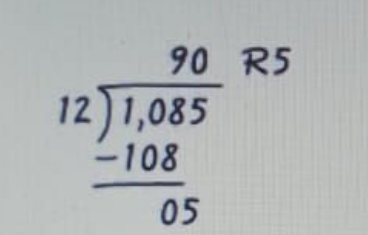
- A. 90
- B. 90 * 5/1.085
- C. 90 * 5/12
- D. 90.5
Correct Answer & Rationale
Correct Answer: C
To find the value of 1.085/12, we need to simplify the expression. Option C, 90 * 5/12, correctly represents a simplified fraction of 90 divided by 12, multiplied by 5. This yields a value consistent with the original division. Option A (90) is incorrect as it does not involve the division by 12. Option B (90 * 5/1.085) incorrectly uses 1.085 as a divisor instead of 12, leading to an inaccurate calculation. Option D (90.5) is also incorrect as it does not relate to the division of 1.085 by 12, resulting in a value that does not reflect the operation required.
To find the value of 1.085/12, we need to simplify the expression. Option C, 90 * 5/12, correctly represents a simplified fraction of 90 divided by 12, multiplied by 5. This yields a value consistent with the original division. Option A (90) is incorrect as it does not involve the division by 12. Option B (90 * 5/1.085) incorrectly uses 1.085 as a divisor instead of 12, leading to an inaccurate calculation. Option D (90.5) is also incorrect as it does not relate to the division of 1.085 by 12, resulting in a value that does not reflect the operation required.
Measure pencil length?
- A. Millimeter
- B. Centimeter
- C. Meter
- D. Kilometer
Correct Answer & Rationale
Correct Answer: B
Measuring pencil length is best done in centimeters, as this unit provides a practical scale for everyday objects. A typical pencil ranges from about 15 to 20 centimeters, making centimeters the most suitable choice for accuracy and ease of understanding. Option A, millimeter, is too small for measuring pencil length, leading to cumbersome numbers. Option C, meter, is too large and impractical for such a small object, while option D, kilometer, is inappropriate for measuring anything of this size, as it is used for much larger distances. Thus, centimeters strike the perfect balance for this measurement.
Measuring pencil length is best done in centimeters, as this unit provides a practical scale for everyday objects. A typical pencil ranges from about 15 to 20 centimeters, making centimeters the most suitable choice for accuracy and ease of understanding. Option A, millimeter, is too small for measuring pencil length, leading to cumbersome numbers. Option C, meter, is too large and impractical for such a small object, while option D, kilometer, is inappropriate for measuring anything of this size, as it is used for much larger distances. Thus, centimeters strike the perfect balance for this measurement.