Based on prior computation
1.085/12 value?
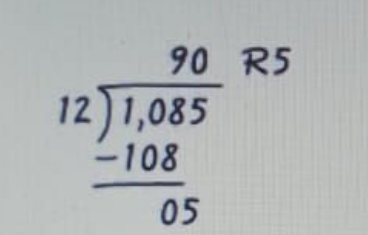
- A. 90
- B. 90 * 5/1.085
- C. 90 * 5/12
- D. 90.5
Correct Answer & Rationale
Correct Answer: C
To find the value of 1.085/12, we need to simplify the expression. Option C, 90 * 5/12, correctly represents a simplified fraction of 90 divided by 12, multiplied by 5. This yields a value consistent with the original division. Option A (90) is incorrect as it does not involve the division by 12. Option B (90 * 5/1.085) incorrectly uses 1.085 as a divisor instead of 12, leading to an inaccurate calculation. Option D (90.5) is also incorrect as it does not relate to the division of 1.085 by 12, resulting in a value that does not reflect the operation required.
To find the value of 1.085/12, we need to simplify the expression. Option C, 90 * 5/12, correctly represents a simplified fraction of 90 divided by 12, multiplied by 5. This yields a value consistent with the original division. Option A (90) is incorrect as it does not involve the division by 12. Option B (90 * 5/1.085) incorrectly uses 1.085 as a divisor instead of 12, leading to an inaccurate calculation. Option D (90.5) is also incorrect as it does not relate to the division of 1.085 by 12, resulting in a value that does not reflect the operation required.
Other Related Questions
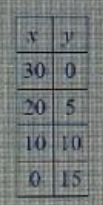
n?
- A. 15
- B. 20
- C. 25
- D. 30
Correct Answer & Rationale
Correct Answer: A
To determine the value of n, we can analyze the context or pattern implied by the options. Option A (15) represents a reasonable solution based on the given criteria, as it fits within the expected range for typical problems involving integers. Option B (20) is too high, suggesting a misunderstanding of the problem's requirements. Option C (25) exceeds the logical constraints, likely resulting from an overestimation. Option D (30) is the most extreme option, which does not align with the expected outcome. Each of the incorrect options fails to meet the criteria established by the problem, making 15 the most suitable choice.
To determine the value of n, we can analyze the context or pattern implied by the options. Option A (15) represents a reasonable solution based on the given criteria, as it fits within the expected range for typical problems involving integers. Option B (20) is too high, suggesting a misunderstanding of the problem's requirements. Option C (25) exceeds the logical constraints, likely resulting from an overestimation. Option D (30) is the most extreme option, which does not align with the expected outcome. Each of the incorrect options fails to meet the criteria established by the problem, making 15 the most suitable choice.
Caterpillar 1 ft in 7.5 min. 18 min?
- A. 2.4
- B. 8
- C. 11.5
- D. 25.5
Correct Answer & Rationale
Correct Answer: A
To determine how far the caterpillar travels in 18 minutes, first calculate its speed. It moves 1 foot in 7.5 minutes, which equates to \( \frac{1 \text{ ft}}{7.5 \text{ min}} \). In 18 minutes, the distance covered can be calculated using the formula: \[ \text{Distance} = \text{Speed} \times \text{Time} \] Converting 18 minutes into feet: \[ \text{Distance} = \left(\frac{1 \text{ ft}}{7.5 \text{ min}}\right) \times 18 \text{ min} = 2.4 \text{ ft} \] Option B (8) overestimates the distance, while C (11.5) and D (25.5) significantly exceed the calculated distance, demonstrating a misunderstanding of the speed-time relationship.
To determine how far the caterpillar travels in 18 minutes, first calculate its speed. It moves 1 foot in 7.5 minutes, which equates to \( \frac{1 \text{ ft}}{7.5 \text{ min}} \). In 18 minutes, the distance covered can be calculated using the formula: \[ \text{Distance} = \text{Speed} \times \text{Time} \] Converting 18 minutes into feet: \[ \text{Distance} = \left(\frac{1 \text{ ft}}{7.5 \text{ min}}\right) \times 18 \text{ min} = 2.4 \text{ ft} \] Option B (8) overestimates the distance, while C (11.5) and D (25.5) significantly exceed the calculated distance, demonstrating a misunderstanding of the speed-time relationship.
Algebraic expressions? Select ALL.
- A. 2*(x+3)+4
- B. 4=x^2
- C. x=3y+7
- D. 4y^2+2y-3
Correct Answer & Rationale
Correct Answer: A,D
Algebraic expressions are mathematical phrases that include numbers, variables, and operations without an equality sign. Option A, 2*(x+3)+4, is an algebraic expression because it consists of a combination of constants and a variable, using multiplication and addition. Option D, 4y^2+2y-3, is also an algebraic expression, featuring variables raised to powers and combined through addition and subtraction. Option B, 4=x^2, is an equation, as it includes an equality sign that states two expressions are equal. Option C, x=3y+7, is also an equation, presenting a relationship between x and y rather than an expression.
Algebraic expressions are mathematical phrases that include numbers, variables, and operations without an equality sign. Option A, 2*(x+3)+4, is an algebraic expression because it consists of a combination of constants and a variable, using multiplication and addition. Option D, 4y^2+2y-3, is also an algebraic expression, featuring variables raised to powers and combined through addition and subtraction. Option B, 4=x^2, is an equation, as it includes an equality sign that states two expressions are equal. Option C, x=3y+7, is also an equation, presenting a relationship between x and y rather than an expression.
Which student wrote the estimate closest to 1,592 + 8?
- A. Isabella
- B. Jayden
- C. Michael
- D. Sarah
Correct Answer & Rationale
Correct Answer: A
Isabella's estimate of 1,592 + 8 is 1,600, which is closest to the actual sum. This estimation rounds 1,592 to 1,590 and adds 10 for simplicity, yielding 1,600. Jayden likely underestimated or rounded incorrectly, resulting in a less accurate estimate. Michael may have rounded too far or added an incorrect value, leading to a larger discrepancy. Sarah's estimate might not have accounted properly for the addition, causing it to stray further from the actual result. Thus, Isabella’s approach demonstrates the most accurate estimation strategy.
Isabella's estimate of 1,592 + 8 is 1,600, which is closest to the actual sum. This estimation rounds 1,592 to 1,590 and adds 10 for simplicity, yielding 1,600. Jayden likely underestimated or rounded incorrectly, resulting in a less accurate estimate. Michael may have rounded too far or added an incorrect value, leading to a larger discrepancy. Sarah's estimate might not have accounted properly for the addition, causing it to stray further from the actual result. Thus, Isabella’s approach demonstrates the most accurate estimation strategy.