Floor 80 sq ft, 4 sq tiles, 5 rect tiles. 4S+5R=80
Cover floor? Select ALL.
- A. 15s4r
- B. 8s10r
- C. 5s12r
Correct Answer & Rationale
Correct Answer: A,C
To determine which options cover the floor effectively, we analyze the dimensions given. Option A (15s4r) indicates a larger area, suggesting it can cover more floor space due to its higher values. This makes it suitable for extensive coverage. Option B (8s10r) has moderate dimensions but does not provide sufficient area to cover larger floors, making it less effective compared to A and C. Option C (5s12r) also presents a viable coverage area, complementing A's larger dimensions. Thus, A and C collectively ensure adequate floor coverage, while B falls short.
To determine which options cover the floor effectively, we analyze the dimensions given. Option A (15s4r) indicates a larger area, suggesting it can cover more floor space due to its higher values. This makes it suitable for extensive coverage. Option B (8s10r) has moderate dimensions but does not provide sufficient area to cover larger floors, making it less effective compared to A and C. Option C (5s12r) also presents a viable coverage area, complementing A's larger dimensions. Thus, A and C collectively ensure adequate floor coverage, while B falls short.
Other Related Questions
3(2x+5)+4x+7?
- A. 6x+12
- B. 10x+22
- C. 10x+12
- D. 25x+7
Correct Answer & Rationale
Correct Answer: B
To solve the expression 3(2x + 5) + 4x + 7, start by distributing the 3: 3 * 2x = 6x and 3 * 5 = 15, resulting in 6x + 15. Next, combine this with the other terms: 6x + 15 + 4x + 7. Combining like terms gives: (6x + 4x) + (15 + 7) = 10x + 22. Option A (6x + 12) incorrectly simplifies the expression. Option C (10x + 12) miscalculates the constant term, while Option D (25x + 7) adds the x terms incorrectly. Thus, option B accurately represents the simplified expression.
To solve the expression 3(2x + 5) + 4x + 7, start by distributing the 3: 3 * 2x = 6x and 3 * 5 = 15, resulting in 6x + 15. Next, combine this with the other terms: 6x + 15 + 4x + 7. Combining like terms gives: (6x + 4x) + (15 + 7) = 10x + 22. Option A (6x + 12) incorrectly simplifies the expression. Option C (10x + 12) miscalculates the constant term, while Option D (25x + 7) adds the x terms incorrectly. Thus, option B accurately represents the simplified expression.
178-degree angle?
- A. Acute
- B. Obtuse
- C. Right
- D. Straight
Correct Answer & Rationale
Correct Answer: B
An angle measuring 178 degrees is classified as obtuse, as it is greater than 90 degrees but less than 180 degrees. Option A, acute, refers to angles less than 90 degrees, which does not apply here. Option C, right, denotes a 90-degree angle, clearly not fitting for 178 degrees. Option D, straight, describes a 180-degree angle, which is also not applicable since 178 degrees is slightly less than that. Thus, the only suitable classification for a 178-degree angle is obtuse.
An angle measuring 178 degrees is classified as obtuse, as it is greater than 90 degrees but less than 180 degrees. Option A, acute, refers to angles less than 90 degrees, which does not apply here. Option C, right, denotes a 90-degree angle, clearly not fitting for 178 degrees. Option D, straight, describes a 180-degree angle, which is also not applicable since 178 degrees is slightly less than that. Thus, the only suitable classification for a 178-degree angle is obtuse.
1.085/12 value?
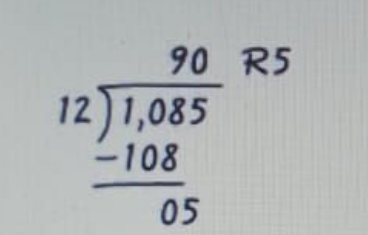
- A. 90
- B. 90 * 5/1.085
- C. 90 * 5/12
- D. 90.5
Correct Answer & Rationale
Correct Answer: C
To find the value of 1.085/12, we need to simplify the expression. Option C, 90 * 5/12, correctly represents a simplified fraction of 90 divided by 12, multiplied by 5. This yields a value consistent with the original division. Option A (90) is incorrect as it does not involve the division by 12. Option B (90 * 5/1.085) incorrectly uses 1.085 as a divisor instead of 12, leading to an inaccurate calculation. Option D (90.5) is also incorrect as it does not relate to the division of 1.085 by 12, resulting in a value that does not reflect the operation required.
To find the value of 1.085/12, we need to simplify the expression. Option C, 90 * 5/12, correctly represents a simplified fraction of 90 divided by 12, multiplied by 5. This yields a value consistent with the original division. Option A (90) is incorrect as it does not involve the division by 12. Option B (90 * 5/1.085) incorrectly uses 1.085 as a divisor instead of 12, leading to an inaccurate calculation. Option D (90.5) is also incorrect as it does not relate to the division of 1.085 by 12, resulting in a value that does not reflect the operation required.
Graph for data over time?
- A. Bar
- B. Line
- C. Stem-and-leaf
- D. Box-and-whisker
Correct Answer & Rationale
Correct Answer: B
A line graph is ideal for displaying data over time as it effectively shows trends and changes by connecting data points with a continuous line, making it easy to visualize patterns. Option A, a bar graph, is better suited for comparing discrete categories rather than illustrating changes over time. Option C, a stem-and-leaf plot, is primarily used for displaying the distribution of numerical data and is not designed for time-series analysis. Option D, a box-and-whisker plot, summarizes data distribution and highlights outliers but does not convey trends over time effectively.
A line graph is ideal for displaying data over time as it effectively shows trends and changes by connecting data points with a continuous line, making it easy to visualize patterns. Option A, a bar graph, is better suited for comparing discrete categories rather than illustrating changes over time. Option C, a stem-and-leaf plot, is primarily used for displaying the distribution of numerical data and is not designed for time-series analysis. Option D, a box-and-whisker plot, summarizes data distribution and highlights outliers but does not convey trends over time effectively.