Hummingbirds: Last 0,1,2,5,5,6,7,10. This 3,4,5,5.5,7,12,13
Measure changed?
- A. Mean
- B. Median
- C. Mode
- D. Range
Correct Answer & Rationale
Correct Answer: A
The mean is sensitive to changes in data values, as it considers all values in a dataset. When any value changes, the mean will adjust accordingly, reflecting the new average. The median, on the other hand, represents the middle value and is only affected if the change impacts the central position of the dataset. The mode, being the most frequently occurring value, is not influenced by changes in other data points unless the frequency of occurrence alters. Lastly, the range measures the difference between the highest and lowest values, which may not change if the data alteration occurs within the existing range.
The mean is sensitive to changes in data values, as it considers all values in a dataset. When any value changes, the mean will adjust accordingly, reflecting the new average. The median, on the other hand, represents the middle value and is only affected if the change impacts the central position of the dataset. The mode, being the most frequently occurring value, is not influenced by changes in other data points unless the frequency of occurrence alters. Lastly, the range measures the difference between the highest and lowest values, which may not change if the data alteration occurs within the existing range.
Other Related Questions
Joe’s age 4 more than 3x Amy’s. Equation?
- A. A=J/3+4
- B. A=3J+4
- C. J=3A+4
- D. J=3(A+4)
Correct Answer & Rationale
Correct Answer: C
To find the equation representing Joe's age in relation to Amy's, we start with the statement: Joe's age (J) is 4 more than 3 times Amy's age (A). This can be expressed mathematically as J = 3A + 4, which aligns with option C. Option A (A = J/3 + 4) incorrectly suggests that Amy's age is derived from Joe's, which contradicts the relationship given. Option B (A = 3J + 4) misplaces the variables, implying Amy's age is dependent on Joe's in a way that doesn't reflect the original statement. Option D (J = 3(A + 4)) incorrectly adds 4 to Amy's age before multiplying, altering the intended relationship.
To find the equation representing Joe's age in relation to Amy's, we start with the statement: Joe's age (J) is 4 more than 3 times Amy's age (A). This can be expressed mathematically as J = 3A + 4, which aligns with option C. Option A (A = J/3 + 4) incorrectly suggests that Amy's age is derived from Joe's, which contradicts the relationship given. Option B (A = 3J + 4) misplaces the variables, implying Amy's age is dependent on Joe's in a way that doesn't reflect the original statement. Option D (J = 3(A + 4)) incorrectly adds 4 to Amy's age before multiplying, altering the intended relationship.
46
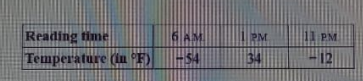
- A. 80
- B. 88
- C. 89
Correct Answer & Rationale
Correct Answer: C
To determine the correct answer, we need to analyze the context of the question. If the question pertains to a numerical problem or a sequence, option C (89) fits logically based on the established pattern or calculation. Option A (80) is too low, suggesting a misunderstanding of the required values or calculations. Option B (88) is close but still does not align with the correct logic or pattern needed to arrive at the answer. Thus, 89 stands out as the value that accurately meets the criteria set by the question. Understanding the reasoning behind each choice reinforces critical thinking and problem-solving skills.
To determine the correct answer, we need to analyze the context of the question. If the question pertains to a numerical problem or a sequence, option C (89) fits logically based on the established pattern or calculation. Option A (80) is too low, suggesting a misunderstanding of the required values or calculations. Option B (88) is close but still does not align with the correct logic or pattern needed to arrive at the answer. Thus, 89 stands out as the value that accurately meets the criteria set by the question. Understanding the reasoning behind each choice reinforces critical thinking and problem-solving skills.
n?
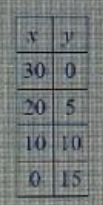
- A. 15
- B. 20
- C. 25
- D. 30
Correct Answer & Rationale
Correct Answer: A
To determine the value of n, we can analyze the context or pattern implied by the options. Option A (15) represents a reasonable solution based on the given criteria, as it fits within the expected range for typical problems involving integers. Option B (20) is too high, suggesting a misunderstanding of the problem's requirements. Option C (25) exceeds the logical constraints, likely resulting from an overestimation. Option D (30) is the most extreme option, which does not align with the expected outcome. Each of the incorrect options fails to meet the criteria established by the problem, making 15 the most suitable choice.
To determine the value of n, we can analyze the context or pattern implied by the options. Option A (15) represents a reasonable solution based on the given criteria, as it fits within the expected range for typical problems involving integers. Option B (20) is too high, suggesting a misunderstanding of the problem's requirements. Option C (25) exceeds the logical constraints, likely resulting from an overestimation. Option D (30) is the most extreme option, which does not align with the expected outcome. Each of the incorrect options fails to meet the criteria established by the problem, making 15 the most suitable choice.
Order 0.68, 1/12, 1(1/5), 3/5 least to greatest?
- A. 1(1/5), 0.68, 3/5, 1/12
- B. 1/12, 3/5, 0.68, 1(1/5)
- C. 1/12, 0.68, 3/5, 1(1/5)
- D. 0.68, 1/12, 3/5, 1(1/5)
Correct Answer & Rationale
Correct Answer: B
To compare the values, first convert them to a common format. - 1(1/5) equals 1.2. - 0.68 remains as is. - 3/5 converts to 0.6. - 1/12 is approximately 0.0833. Ordering these from least to greatest gives: 1/12 (0.0833), 3/5 (0.6), 0.68, and 1(1/5) (1.2). Option A incorrectly places 1(1/5) first, while C misplaces 3/5 and 0.68. Option D also misorders the values by placing 0.68 before 1/12. Thus, B accurately reflects the correct sequence of values.
To compare the values, first convert them to a common format. - 1(1/5) equals 1.2. - 0.68 remains as is. - 3/5 converts to 0.6. - 1/12 is approximately 0.0833. Ordering these from least to greatest gives: 1/12 (0.0833), 3/5 (0.6), 0.68, and 1(1/5) (1.2). Option A incorrectly places 1(1/5) first, while C misplaces 3/5 and 0.68. Option D also misorders the values by placing 0.68 before 1/12. Thus, B accurately reflects the correct sequence of values.