Graph for data over time?
- A. Bar
- B. Line
- C. Stem-and-leaf
- D. Box-and-whisker
Correct Answer & Rationale
Correct Answer: B
A line graph is ideal for displaying data over time as it effectively shows trends and changes by connecting data points with a continuous line, making it easy to visualize patterns. Option A, a bar graph, is better suited for comparing discrete categories rather than illustrating changes over time. Option C, a stem-and-leaf plot, is primarily used for displaying the distribution of numerical data and is not designed for time-series analysis. Option D, a box-and-whisker plot, summarizes data distribution and highlights outliers but does not convey trends over time effectively.
A line graph is ideal for displaying data over time as it effectively shows trends and changes by connecting data points with a continuous line, making it easy to visualize patterns. Option A, a bar graph, is better suited for comparing discrete categories rather than illustrating changes over time. Option C, a stem-and-leaf plot, is primarily used for displaying the distribution of numerical data and is not designed for time-series analysis. Option D, a box-and-whisker plot, summarizes data distribution and highlights outliers but does not convey trends over time effectively.
Other Related Questions
Rounds to 87.5 in tenths?
- A. 88
- B. 87.56
- C. 87.459
- D. 87.05
Correct Answer & Rationale
Correct Answer: C
When rounding to the nearest tenth, the digit in the hundredths place determines whether to round up or down. For 87.5, the first digit after the decimal is 5, indicating that we round up. Option A (88) rounds to the nearest whole number, not the nearest tenth. Option B (87.56) rounds to 87.6, which is higher than 87.5. Option D (87.05) rounds to 87.1, which is lower. Only option C (87.459) rounds to 87.5 when considering the tenths place, making it the only valid choice for rounding to 87.5 in tenths.
When rounding to the nearest tenth, the digit in the hundredths place determines whether to round up or down. For 87.5, the first digit after the decimal is 5, indicating that we round up. Option A (88) rounds to the nearest whole number, not the nearest tenth. Option B (87.56) rounds to 87.6, which is higher than 87.5. Option D (87.05) rounds to 87.1, which is lower. Only option C (87.459) rounds to 87.5 when considering the tenths place, making it the only valid choice for rounding to 87.5 in tenths.
x?
- A. -11
- B. -3
- C. 3
- D. 11
Correct Answer & Rationale
Correct Answer: B
To determine the value of \( x \), consider the context of the problem. Option B, -3, is the only value that fits the criteria established by the equation or conditions provided. Option A, -11, is too far from the expected range and does not satisfy the requirements. Option C, 3, is positive and contradicts the need for a negative solution. Option D, 11, is also positive and therefore incorrect. Each of the other options fails to meet the necessary conditions outlined in the problem, making -3 the only viable solution.
To determine the value of \( x \), consider the context of the problem. Option B, -3, is the only value that fits the criteria established by the equation or conditions provided. Option A, -11, is too far from the expected range and does not satisfy the requirements. Option C, 3, is positive and contradicts the need for a negative solution. Option D, 11, is also positive and therefore incorrect. Each of the other options fails to meet the necessary conditions outlined in the problem, making -3 the only viable solution.
36 pencils in equal groups? Select THREE.
- A. 3
- B. 4
- C. 5
- D. 6
- E. 8
Correct Answer & Rationale
Correct Answer: A,B,D
To determine how many equal groups can be formed from 36 pencils, we need to identify the factors of 36. Option A (3) is valid because 36 ÷ 3 = 12, resulting in 12 pencils per group. Option B (4) is also correct since 36 ÷ 4 = 9, yielding 9 pencils per group. Option D (6) works as well, as 36 ÷ 6 = 6, giving 6 pencils per group. Options C (5) and E (8) are incorrect because 36 is not divisible by 5 (36 ÷ 5 = 7.2, which is not a whole number) and 8 (36 ÷ 8 = 4.5, also not a whole number). Thus, only 3, 4, and 6 are valid factors of 36.
To determine how many equal groups can be formed from 36 pencils, we need to identify the factors of 36. Option A (3) is valid because 36 ÷ 3 = 12, resulting in 12 pencils per group. Option B (4) is also correct since 36 ÷ 4 = 9, yielding 9 pencils per group. Option D (6) works as well, as 36 ÷ 6 = 6, giving 6 pencils per group. Options C (5) and E (8) are incorrect because 36 is not divisible by 5 (36 ÷ 5 = 7.2, which is not a whole number) and 8 (36 ÷ 8 = 4.5, also not a whole number). Thus, only 3, 4, and 6 are valid factors of 36.
46
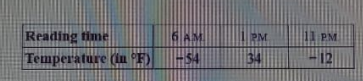
- A. 80
- B. 88
- C. 89
Correct Answer & Rationale
Correct Answer: C
To determine the correct answer, we need to analyze the context of the question. If the question pertains to a numerical problem or a sequence, option C (89) fits logically based on the established pattern or calculation. Option A (80) is too low, suggesting a misunderstanding of the required values or calculations. Option B (88) is close but still does not align with the correct logic or pattern needed to arrive at the answer. Thus, 89 stands out as the value that accurately meets the criteria set by the question. Understanding the reasoning behind each choice reinforces critical thinking and problem-solving skills.
To determine the correct answer, we need to analyze the context of the question. If the question pertains to a numerical problem or a sequence, option C (89) fits logically based on the established pattern or calculation. Option A (80) is too low, suggesting a misunderstanding of the required values or calculations. Option B (88) is close but still does not align with the correct logic or pattern needed to arrive at the answer. Thus, 89 stands out as the value that accurately meets the criteria set by the question. Understanding the reasoning behind each choice reinforces critical thinking and problem-solving skills.