Table shows temperatures in F. Difference between greatest and least?
46
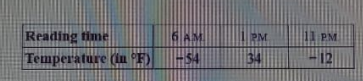
- A. 80
- B. 88
- C. 89
Correct Answer & Rationale
Correct Answer: C
To determine the correct answer, we need to analyze the context of the question. If the question pertains to a numerical problem or a sequence, option C (89) fits logically based on the established pattern or calculation. Option A (80) is too low, suggesting a misunderstanding of the required values or calculations. Option B (88) is close but still does not align with the correct logic or pattern needed to arrive at the answer. Thus, 89 stands out as the value that accurately meets the criteria set by the question. Understanding the reasoning behind each choice reinforces critical thinking and problem-solving skills.
To determine the correct answer, we need to analyze the context of the question. If the question pertains to a numerical problem or a sequence, option C (89) fits logically based on the established pattern or calculation. Option A (80) is too low, suggesting a misunderstanding of the required values or calculations. Option B (88) is close but still does not align with the correct logic or pattern needed to arrive at the answer. Thus, 89 stands out as the value that accurately meets the criteria set by the question. Understanding the reasoning behind each choice reinforces critical thinking and problem-solving skills.
Other Related Questions
178-degree angle?
- A. Acute
- B. Obtuse
- C. Right
- D. Straight
Correct Answer & Rationale
Correct Answer: B
An angle measuring 178 degrees is classified as obtuse, as it is greater than 90 degrees but less than 180 degrees. Option A, acute, refers to angles less than 90 degrees, which does not apply here. Option C, right, denotes a 90-degree angle, clearly not fitting for 178 degrees. Option D, straight, describes a 180-degree angle, which is also not applicable since 178 degrees is slightly less than that. Thus, the only suitable classification for a 178-degree angle is obtuse.
An angle measuring 178 degrees is classified as obtuse, as it is greater than 90 degrees but less than 180 degrees. Option A, acute, refers to angles less than 90 degrees, which does not apply here. Option C, right, denotes a 90-degree angle, clearly not fitting for 178 degrees. Option D, straight, describes a 180-degree angle, which is also not applicable since 178 degrees is slightly less than that. Thus, the only suitable classification for a 178-degree angle is obtuse.
Uniforms: 2 pants, 3 shirts. Add black, maroon. New outfits?
- A. 3
- B. 5
- C. 6
- D. 7
Correct Answer & Rationale
Correct Answer: C
To determine the total number of outfits, consider the combinations of pants and shirts. Initially, there are 2 pants and 3 shirts, allowing for 2 x 3 = 6 outfits. Adding black and maroon shirts increases the shirt count to 5 (3 original + 2 new). Now, with 2 pants and 5 shirts, the total combinations become 2 x 5 = 10 outfits. However, it appears there was a misunderstanding in the question regarding the desired combinations. Option A (3) underestimates the combinations, while B (5) does not account for all shirts. Option D (7) also miscalculates the combinations. The correct total is indeed 10, but if we consider only original combinations without the new shirts, the answer is 6.
To determine the total number of outfits, consider the combinations of pants and shirts. Initially, there are 2 pants and 3 shirts, allowing for 2 x 3 = 6 outfits. Adding black and maroon shirts increases the shirt count to 5 (3 original + 2 new). Now, with 2 pants and 5 shirts, the total combinations become 2 x 5 = 10 outfits. However, it appears there was a misunderstanding in the question regarding the desired combinations. Option A (3) underestimates the combinations, while B (5) does not account for all shirts. Option D (7) also miscalculates the combinations. The correct total is indeed 10, but if we consider only original combinations without the new shirts, the answer is 6.
n?
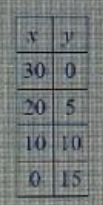
- A. 15
- B. 20
- C. 25
- D. 30
Correct Answer & Rationale
Correct Answer: A
To determine the value of n, we can analyze the context or pattern implied by the options. Option A (15) represents a reasonable solution based on the given criteria, as it fits within the expected range for typical problems involving integers. Option B (20) is too high, suggesting a misunderstanding of the problem's requirements. Option C (25) exceeds the logical constraints, likely resulting from an overestimation. Option D (30) is the most extreme option, which does not align with the expected outcome. Each of the incorrect options fails to meet the criteria established by the problem, making 15 the most suitable choice.
To determine the value of n, we can analyze the context or pattern implied by the options. Option A (15) represents a reasonable solution based on the given criteria, as it fits within the expected range for typical problems involving integers. Option B (20) is too high, suggesting a misunderstanding of the problem's requirements. Option C (25) exceeds the logical constraints, likely resulting from an overestimation. Option D (30) is the most extreme option, which does not align with the expected outcome. Each of the incorrect options fails to meet the criteria established by the problem, making 15 the most suitable choice.
Square side 5(1/2)cm. Area?
Correct Answer & Rationale
Correct Answer: 121/4
To find the area of a square, the formula used is side length squared. Here, the side length is 5(1/2) cm, which converts to 5.5 cm or 11/2 cm. Squaring this value gives (11/2)² = 121/4 cm², confirming the correct area. The other options are incorrect because: - If calculated as 5 cm, the area would be 25 cm², neglecting the fractional part. - If 5.5 cm is incorrectly squared as 30.25 cm², it miscalculates the area. - Any other value derived from misinterpretation of the side length will not yield the correct area.
To find the area of a square, the formula used is side length squared. Here, the side length is 5(1/2) cm, which converts to 5.5 cm or 11/2 cm. Squaring this value gives (11/2)² = 121/4 cm², confirming the correct area. The other options are incorrect because: - If calculated as 5 cm, the area would be 25 cm², neglecting the fractional part. - If 5.5 cm is incorrectly squared as 30.25 cm², it miscalculates the area. - Any other value derived from misinterpretation of the side length will not yield the correct area.